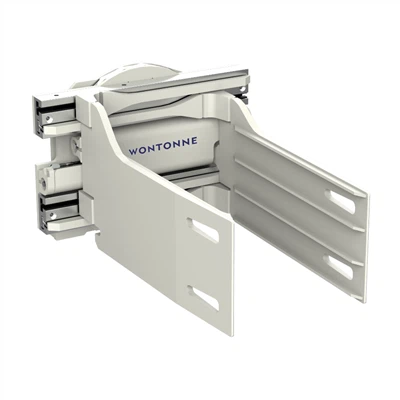
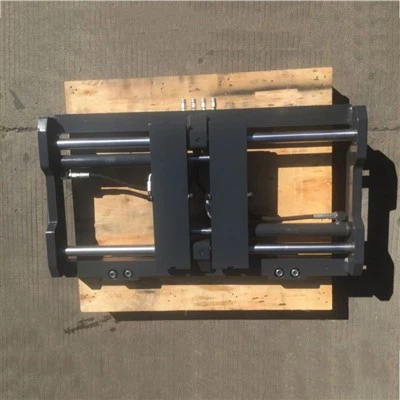
Hey there! As a supplier of fork positioners, I've seen firsthand how these nifty attachments can revolutionize the way you handle different types of loads. In this blog, I'll break down how fork positioners tackle various loads, share some real - world examples, and introduce you to our top - notch product series.
Understanding Fork Positioners
First off, let's get on the same page about what fork positioners are. They're hydraulic attachments that allow you to adjust the distance between the forks of a forklift quickly and easily. Instead of manually moving the forks, you can do it right from the forklift's cab with the push of a button. This not only saves time but also reduces the risk of injury to operators.
Handling Palletized Loads
Palletized loads are one of the most common types of loads in warehouses and distribution centers. Fork positioners are a game - changer here. With a palletized load, the width of the pallets can vary. Some might be standard 48x40 inches, while others could be custom - sized.
Our FPD30E Series Fork Positioners are perfect for this job. They offer a wide range of fork adjustment, so you can easily accommodate different pallet widths. Whether you're dealing with small, lightweight pallets or large, heavy - duty ones, the FPD30E can adjust the forks to fit snugly around the pallet. This ensures a secure grip and prevents the load from shifting during transport.
Let's say you have a mix of Euro pallets and North American pallets in your warehouse. The Euro pallets are typically 800x1200 mm, while the North American ones are 48x40 inches. With a fork positioner, you don't have to swap out the forks or make manual adjustments every time you switch between pallet types. You can just adjust the fork width on the fly, making your operations much more efficient.
Dealing with Odd - Shaped Loads
Not all loads come neatly packaged on pallets. Sometimes, you'll have to handle odd - shaped items like pipes, barrels, or large machinery parts. This is where the flexibility of fork positioners really shines.
Our E Series fork Positioners are designed to handle these challenging loads. The adjustable forks can be positioned to fit the unique shape of the load. For example, when handling pipes, you can spread the forks wide enough to cradle the pipes securely. This prevents the pipes from rolling off the forks during lifting and transportation.
Barrels are another tricky load. You can adjust the forks to fit around the circumference of the barrel, providing a stable base for lifting. And for large machinery parts, the fork positioner allows you to position the forks precisely to balance the load and prevent it from tipping.
In a manufacturing plant, you might have to move different types of components from one area to another. Some components might be long and thin, while others are bulky and irregular. The E Series fork positioners can adapt to these different shapes, making the material handling process much smoother.
Heavy - Duty and Light - Duty Loads
Fork positioners are also great for handling loads of different weights. Whether you're dealing with light - duty loads like boxes of office supplies or heavy - duty loads like steel coils, there's a fork positioner for the job.
Our G Series fork Positioners are built for heavy - duty applications. They have a high load - capacity rating and are made from strong, durable materials. When lifting steel coils that can weigh several tons, the G Series fork positioners can adjust the forks to provide a secure grip and distribute the weight evenly.
On the other hand, for light - duty loads, a standard fork positioner can do the job just fine. You can adjust the forks to pick up small boxes or cartons without over - stressing the equipment. This versatility means you don't have to invest in multiple types of forklifts for different load weights. One forklift with a fork positioner can handle it all.
Real - World Benefits
I've talked about the technical aspects, but what does this mean in the real world? Well, using fork positioners can lead to significant cost savings. You'll save on labor costs because operators can adjust the forks quickly without leaving the cab. This means more loads can be moved in less time.
There's also a reduction in product damage. When the forks are properly adjusted to fit the load, there's less chance of the load shifting or falling during transport. This saves you money on replacing damaged goods.
Safety is another major benefit. Manual fork adjustment can be dangerous, as operators have to get close to the forks and the load. With a fork positioner, all adjustments are made from the safety of the cab, reducing the risk of accidents.
Why Choose Our Fork Positioners
As a supplier, we take pride in offering high - quality fork positioners. Our products are built to last, with robust hydraulic systems and durable construction. We also provide excellent customer support, so if you have any questions or run into any issues, our team is here to help.


Our fork positioners are designed with the latest technology to ensure smooth and precise operation. Whether you're a small warehouse or a large - scale distribution center, we have a fork positioner that will meet your needs.
Contact Us for Purchase
If you're interested in improving your material handling operations with our fork positioners, we'd love to hear from you. Whether you need more information about our product series, want a quote, or have any specific requirements, don't hesitate to reach out. We're here to help you find the perfect fork positioner for your business.
References
- Forklift Operator's Manuals
- Industry Reports on Material Handling Equipment
- Hydraulic Attachment Manufacturer's Specifications