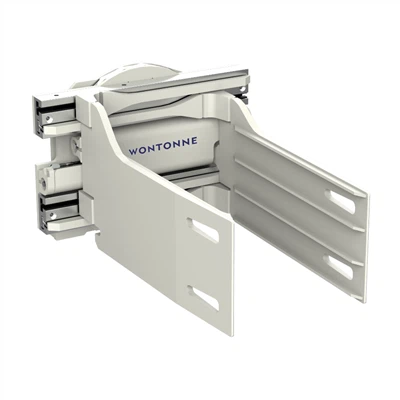
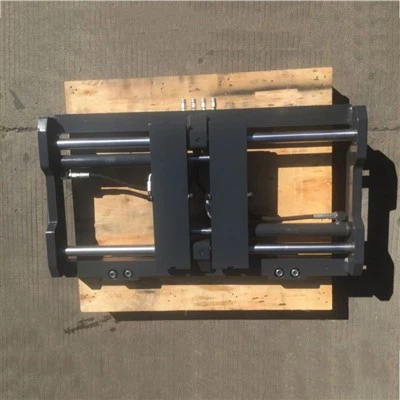
A forklift rotator is a crucial attachment in many industrial settings, enabling operators to handle loads more efficiently and with greater flexibility. As a leading supplier of forklift rotators, we often receive inquiries about how these remarkable devices work. In this blog post, I'll delve into the mechanics of a forklift rotator, exploring its components, operation, and the benefits it brings to various industries.
Components of a Forklift Rotator
To understand how a forklift rotator works, it's essential to familiarize ourselves with its key components. A typical forklift rotator consists of the following parts:
- Hydraulic Cylinders: These are the powerhouses of the rotator. Hydraulic cylinders convert hydraulic pressure into linear motion, which is then used to drive the rotation of the attachment. The number and size of hydraulic cylinders can vary depending on the specific model and capacity of the rotator.
- Rotary Bearing: The rotary bearing is a critical component that allows the rotator to rotate smoothly. It provides support and stability to the rotating structure, ensuring that the load can be turned without any wobbling or instability. High-quality rotary bearings are designed to withstand heavy loads and continuous use.
- Mounting Bracket: The mounting bracket is used to attach the rotator to the forklift. It is designed to fit securely onto the forklift's carriage, providing a stable connection between the rotator and the forklift. The mounting bracket may have different configurations depending on the type of forklift and the specific requirements of the application.
- Control Valves: Control valves are used to regulate the flow of hydraulic fluid to the hydraulic cylinders. They allow the operator to control the speed and direction of the rotation, as well as the clamping force if the rotator is equipped with a clamping mechanism. The control valves are typically located on the forklift's control panel or within easy reach of the operator.
- Clamping Mechanism (Optional): Some forklift rotators are equipped with a clamping mechanism, which allows them to grip and hold the load securely during rotation. The clamping mechanism can be hydraulic or mechanical, depending on the design of the rotator. It provides additional stability and control when handling irregularly shaped or slippery loads.
How a Forklift Rotator Works
Now that we've familiarized ourselves with the components of a forklift rotator, let's take a closer look at how it works. The operation of a forklift rotator can be divided into the following steps:


- Attachment to the Forklift: The first step is to attach the rotator to the forklift using the mounting bracket. This typically involves aligning the mounting holes on the rotator with the corresponding holes on the forklift's carriage and securing them with bolts or pins. Once the rotator is securely attached, the hydraulic hoses are connected to the forklift's hydraulic system.
- Load Handling: The operator positions the forklift in front of the load and lowers the forks onto the load. If the rotator is equipped with a clamping mechanism, the operator activates the clamping mechanism to grip the load securely. The hydraulic cylinders are then used to lift the load off the ground.
- Rotation: Once the load is lifted, the operator can use the control valves to initiate the rotation of the rotator. By controlling the flow of hydraulic fluid to the hydraulic cylinders, the operator can adjust the speed and direction of the rotation. The rotary bearing allows the rotator to rotate smoothly, ensuring that the load can be turned to the desired angle.
- Placement of the Load: After the load has been rotated to the desired angle, the operator can lower the forks and release the load. If the rotator is equipped with a clamping mechanism, the operator deactivates the clamping mechanism to release the load. The forklift can then be moved to the next location to handle another load.
Benefits of Using a Forklift Rotator
The use of a forklift rotator offers several benefits in various industries. Here are some of the key advantages:
- Increased Efficiency: A forklift rotator allows operators to handle loads more efficiently by eliminating the need for manual rotation or repositioning of the load. This saves time and reduces the risk of injuries associated with manual handling.
- Greater Flexibility: With a forklift rotator, operators can rotate loads in any direction, making it easier to access hard-to-reach areas or position the load precisely. This flexibility is particularly useful in industries such as manufacturing, warehousing, and logistics.
- Improved Safety: By providing a secure and stable way to handle loads, a forklift rotator reduces the risk of accidents and injuries. The clamping mechanism, if equipped, ensures that the load is held securely during rotation, preventing it from falling or shifting.
- Versatility: Forklift rotators can be used with a wide range of loads, including pallets, drums, barrels, and irregularly shaped objects. This versatility makes them a valuable tool in many different industries.
- Cost Savings: The increased efficiency and productivity provided by a forklift rotator can result in significant cost savings over time. By reducing the time and labor required to handle loads, businesses can improve their bottom line and increase their competitiveness.
Our Forklift Rotator Products
As a leading supplier of forklift rotators, we offer a wide range of high-quality products to meet the diverse needs of our customers. Our forklift rotators are designed and manufactured to the highest standards, ensuring reliability, durability, and performance. Here are some of our popular models:
- RRB20D D Series Rotator, Hollow-out Type: This model features a hollow-out design, which allows for easy handling of loads with irregular shapes or sizes. It is suitable for a variety of applications, including the handling of drums, barrels, and other cylindrical objects.
- D Series Rotator, Standrad Type: The standard type D Series rotator is a versatile and reliable option for general load handling. It offers smooth rotation and precise control, making it ideal for use in warehouses, manufacturing plants, and other industrial settings.
- RRB35D Standard Type Forklift Rotator – High-Performance D Series Attachment: This high-performance model is designed for heavy-duty applications. It features a robust construction and powerful hydraulic system, allowing it to handle large and heavy loads with ease.
Contact Us for Purchasing and Consultation
If you're interested in learning more about our forklift rotator products or have any questions about how they work, please don't hesitate to contact us. Our team of experts is always ready to provide you with detailed information, technical support, and assistance in selecting the right forklift rotator for your specific needs. We look forward to working with you and helping you improve your material handling operations.
References
- "Forklift Attachments: A Comprehensive Guide." Industrial Equipment News.
- "Hydraulic Systems and Components." Fluid Power Journal.
- "Material Handling Equipment: Principles and Applications." McGraw-Hill Education.