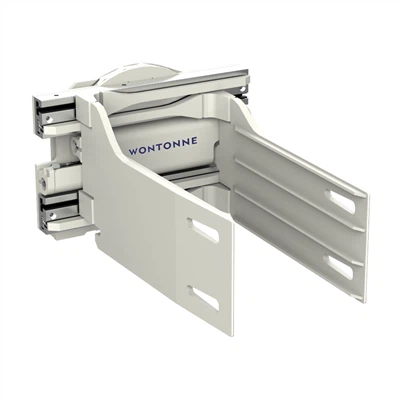
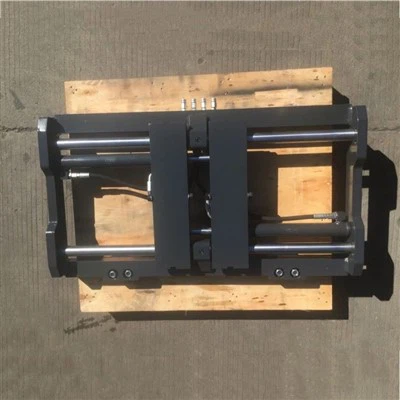
Forklift rotators are invaluable tools in various industries, enabling the efficient handling and rotation of loads. As a supplier of forklift rotators, I've witnessed firsthand the benefits they bring to material handling operations. However, like any equipment, forklift rotators have their limitations. Understanding these limitations is crucial for users to optimize their use and make informed decisions.
1. Load Capacity and Dimensions
One of the primary limitations of a forklift rotator is its load - capacity constraints. Each forklift rotator is designed to handle a specific maximum load. Exceeding this capacity can lead to serious safety risks, including structural failure of the rotator and the forklift itself. For example, if a forklift rotator is rated for a maximum load of 5 tons and is used to handle a 7 - ton load, it may experience excessive stress on its components such as the hydraulic cylinders, bearings, and the rotational mechanism. This can result in premature wear, potential breakage, and an increased likelihood of accidents.
The dimensions of the load also play a crucial role. Forklift rotators are designed to handle loads within a certain size range. If the load is too large or has an irregular shape that extends beyond the rotator's reach or interference - free zone, it can cause problems. For instance, a very long and thin load might not be stably held during rotation, increasing the risk of the load slipping or falling. If the load's width exceeds the rotator's clamping capacity, proper gripping cannot be achieved, endangering the lifting and rotation process.
2. Rotational Speed and Precision
Although forklift rotators provide the ability to rotate loads, their rotational speed and precision are limited. The rotational speed is often restricted by the hydraulic system powering the rotator. A lower - powered hydraulic system will result in slower rotation, which can be a drawback in high - volume, time - sensitive operations. For example, in a busy warehouse where multiple loads need to be quickly rotated for stacking or unloading, a slow - rotating forklift rotator can impede the overall workflow and reduce productivity.
In terms of precision, achieving exact rotational angles can be challenging. The mechanical and hydraulic components of the rotator may introduce small errors in the rotation. For example, if a load needs to be rotated exactly 90 degrees for precise placement, the actual rotation may deviate slightly due to factors such as hydraulic fluid compressibility, wear in the rotational bearings, and the inherent play in the mechanical linkages of the rotator. This lack of precision can be a significant problem in applications where accurate load positioning is critical, such as in manufacturing processes where parts need to be assembled in a specific orientation.
3. Environmental Adaptability
Forklift rotators may face limitations in certain environmental conditions. In extremely cold environments, the hydraulic fluid in the rotator may thicken, reducing the efficiency of the hydraulic system. This can lead to slower operation, difficulties in achieving smooth rotation, and even potential damage to the hydraulic components due to increased pressure. For example, in a cold storage facility where temperatures can drop well below freezing, the forklift rotator may not function as effectively as it would in a normal - temperature environment.
On the other hand, in dusty or dirty environments, the internal components of the rotator, such as the bearings and the hydraulic seals, are at risk of contamination. Dust and debris can enter the rotator, causing abrasion of the moving parts and leading to increased wear and tear. Over time, this can result in reduced performance and a shorter service life for the rotator. For instance, in a construction site or a mining operation where there is a high presence of dust and dirt, the forklift rotator needs to be frequently maintained to prevent these issues.
4. Compatibility with Forklifts
Not all forklift rotators are compatible with every type of forklift. The mounting mechanism of the rotator must match the forklift's mast and carriage specifications. Different forklifts have different lifting capacities, mast types (e.g., single - stage, multi - stage), and carriage designs. A rotator that is designed for a specific type of forklift may not fit properly on another make or model. For example, a rotator designed for a narrow - aisle forklift may not be compatible with a counterbalance forklift due to differences in the mast geometry and the distance between the forks.
Moreover, the hydraulic system of the forklift must also be compatible with the rotator. The hydraulic flow rate and pressure specifications of the forklift and the rotator need to be well - matched. If the forklift's hydraulic system cannot provide the required flow rate and pressure for the rotator, it may result in improper operation, such as slow rotation or difficulty in holding the load during rotation.
5. Maintenance and Service Requirements
Forklift rotators require regular maintenance to ensure their proper functioning. The hydraulic system needs to be checked for leaks, and the hydraulic fluid needs to be changed at regular intervals. The bearings and other moving parts need to be lubricated to reduce friction and wear. However, the complexity of the rotator's design can make maintenance tasks challenging. For example, accessing the internal components for inspection and repair may require specialized tools and technical expertise.


In addition, the availability of spare parts can also be a limitation. If a critical component of the forklift rotator fails, and the spare part is not readily available, it can lead to significant downtime. This is especially true for older or less - common models of rotators.
Our Product Offerings
Despite these limitations, we offer a range of high - quality forklift rotators that are designed to minimize these issues. Our RRB50D D Series Rotator, Hollow - out Type is engineered to provide reliable performance within its specified load capacity and has been designed with optimized hydraulic systems to ensure relatively smooth rotation. The D Series Rotator, Standrad Type is another excellent option, offering a good balance between load - handling capabilities and ease of use. And for those in need of heavy - duty performance, our RRB35D D Series Forklift Rotator – Standard Type, Heavy - Duty Performance is a robust solution.
We understand that every customer's needs are unique, and we are committed to helping you choose the right forklift rotator for your specific application. If you are interested in learning more about our products or have any questions regarding the limitations and how to overcome them in your operations, please feel free to reach out to us for a detailed discussion. We are here to guide you through the selection process and ensure that you get the most out of your forklift rotator investment.
References
- "Material Handling Equipment Handbook", Industrial Press Inc.
- "Forklift Safety and Operation Manual", Occupational Safety and Health Administration (OSHA)