Hey there! As a supplier of Goods Cages, I've seen firsthand the incredible flexibility that these nifty contraptions offer. In this blog, I'm gonna break down what makes the designs of goods cages so flexible and why it matters to you.
Custom Sizing
One of the most obvious aspects of flexibility in goods cage designs is custom sizing. You see, different businesses have different needs when it comes to storing and transporting goods. Some might need a small cage for delicate items, while others require a large one for bulky equipment. That's where custom sizing comes in.
We can create goods cages in a wide range of dimensions. Whether you need a compact cage that's just a few feet in length and width for use in a tight storage area, or a massive cage that can hold tons of heavy materials, we've got you covered. This means that no matter what your specific requirements are, you can get a goods cage that fits perfectly into your operations. For example, a small retail store might need a Goods Cages that can fit in the backroom without taking up too much space, while a large manufacturing plant could require a cage that can be easily loaded onto a forklift and transported around the factory floor.
Modular Design
Another great feature of modern goods cage designs is their modular nature. A modular cage is made up of individual components that can be easily assembled, disassembled, and reconfigured. This offers a whole new level of flexibility.
Let's say you initially set up a goods cage for storing one type of product. But as your business evolves, you need to change the way you use the cage. Maybe you start dealing with a different size or shape of goods. With a modular cage, you can simply take it apart and rearrange the components to create a new configuration. You can add or remove panels, change the height of the cage, or even connect multiple cages together to form a larger storage unit. This modularity not only saves you money in the long run but also allows you to adapt to changing business needs quickly. For instance, a warehouse that experiences seasonal fluctuations in inventory can easily adjust the size and layout of their Forklift Goods Cages to accommodate different volumes of stock.
Different Materials
Goods cages can be made from a variety of materials, and this choice of materials adds to their flexibility. The most common materials used are steel, aluminum, and plastic.
Steel cages are known for their strength and durability. They can withstand heavy loads and rough handling, making them ideal for industrial applications where goods are being moved around a lot. Steel cages are also resistant to corrosion, which means they can be used in outdoor or wet environments without getting damaged. On the other hand, aluminum cages are lightweight yet still quite strong. They are a great option if you need to move the cages around frequently, as they are easier to lift and transport. Plastic cages, meanwhile, are often used for storing lighter items or in environments where you need to avoid scratching the goods. They are also easy to clean and can be molded into different shapes. Depending on your specific needs, you can choose the material that best suits your operations. For example, a food processing facility might opt for plastic Goods Cages because they are hygienic and easy to sanitize, while a construction site might prefer steel cages for their robustness.
Access Options
The way you access the goods inside the cage is another area where design flexibility comes into play. There are several different access options available, each with its own advantages.
One common option is the swing door. Swing doors are easy to open and close, and they provide a wide opening for loading and unloading goods. They can be installed on one or more sides of the cage, depending on your needs. Another option is the sliding door. Sliding doors are great for tight spaces because they don't require any extra clearance to open. They are also more secure than swing doors in some cases, as they can be locked more easily. Some goods cages even come with removable panels, which give you the ultimate flexibility in terms of access. You can remove the panels completely to create a large opening or just partially remove them for smaller items. This allows you to choose the access option that works best for your specific goods and the way you handle them. For example, a furniture store might prefer swing doors on their Forklift Goods Cages to easily load and unload large pieces of furniture, while a parts warehouse might opt for sliding doors to save space in the aisles.
Compatibility with Forklifts
If you're using forklifts to move your goods cages, then compatibility is crucial. Modern goods cage designs are often made to be easily compatible with different types of forklifts.
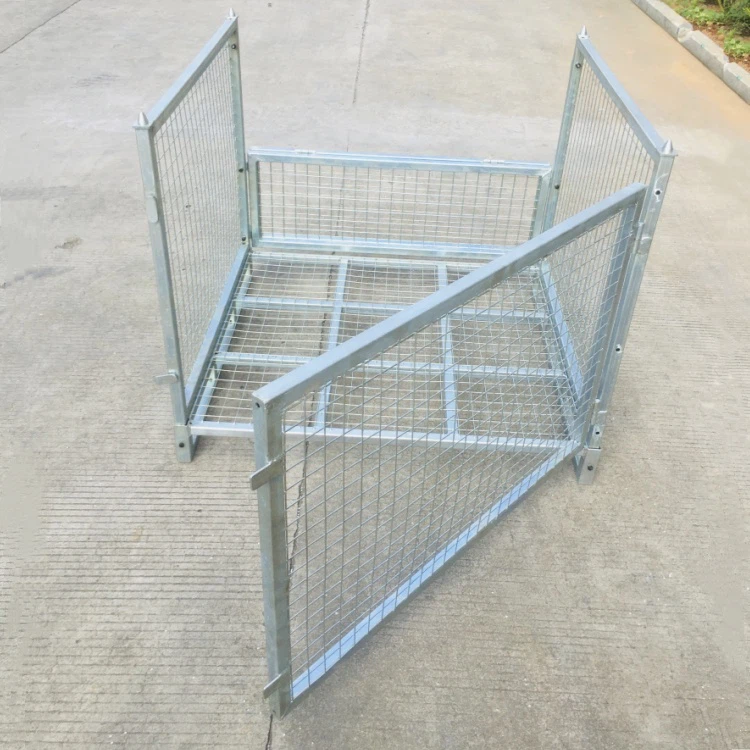

There are various attachment points and mechanisms that can be built into the cage to ensure a secure fit on the forklift. Some cages have standard forklift pockets that allow the forks to slide in easily, while others have more advanced attachment systems that provide a tighter and more stable connection. This flexibility in forklift compatibility means that you can use your existing forklift fleet to move the cages without having to make any major modifications. It also allows you to choose the forklift that best suits your operations, whether it's a small, maneuverable forklift for a narrow warehouse or a large, heavy-duty forklift for outdoor use. For example, a logistics company that uses a mix of different forklifts can rely on the compatibility of Forklift Safety Access Cage to ensure smooth and efficient handling of their goods.
Stackability
Stackability is an important feature that adds to the flexibility of goods cage designs. Stackable cages can be piled on top of each other, which maximizes storage space.
When you stack cages, you can store more goods in a smaller area, which is especially useful if you have limited warehouse space. Stackable cages are designed with features like interlocking mechanisms or stable bases to ensure that they can be stacked safely and securely. This not only saves space but also makes it easier to organize your inventory. You can stack cages of the same type together or even stack different types of cages on top of each other, depending on the size and weight of the goods. For example, a distribution center can stack multiple Goods Cages to create a tall storage unit, allowing them to store a large volume of goods in a relatively small footprint.
Adaptability to Different Environments
Goods cages need to be able to adapt to different environments. Whether it's a cold storage facility, a humid warehouse, or an outdoor construction site, the cage should be able to withstand the conditions.
As mentioned earlier, the choice of materials plays a big role in the cage's adaptability. Steel cages can be coated with a special paint or finish to protect them from corrosion in wet or outdoor environments. Plastic cages are often resistant to moisture and chemicals, making them suitable for use in food processing or chemical storage facilities. Additionally, the design of the cage can be adjusted to meet the specific requirements of the environment. For example, in a cold storage facility, the cage might need to have insulation to prevent the goods from freezing, or in a dusty environment, it might need to have a sealed design to keep the dust out. This adaptability ensures that your goods are protected no matter where they are stored or transported.
Why Flexibility Matters
So, why does all this flexibility in goods cage designs matter? Well, it boils down to efficiency and cost - effectiveness.
By having a goods cage that can be customized to your specific needs, you can store and transport your goods more efficiently. You can make the most of your available space, reduce the time it takes to load and unload goods, and ensure that your goods are protected. This, in turn, leads to cost savings. You don't have to invest in multiple cages for different purposes or make expensive modifications to your existing equipment. The ability to adapt the cage as your business changes also means that you can future - proof your operations. You won't have to replace the cage every time your needs change, which saves you money in the long run.
Contact Us for Your Goods Cage Needs
If you're looking for high - quality, flexible goods cages for your business, we're here to help. Our team of experts can work with you to understand your specific requirements and design a cage that meets all your needs. Whether you need a custom - sized cage, a modular design, or a cage made from a specific material, we've got the expertise and resources to deliver.
Don't hesitate to reach out to us to discuss your options and get a quote. We're committed to providing you with the best goods cage solutions at competitive prices. Let's work together to improve the efficiency and effectiveness of your storage and transportation operations.
References
- Industry reports on warehouse storage solutions
- Manufacturer specifications for goods cages and forklift attachments