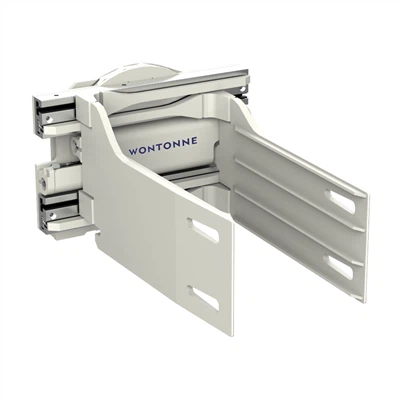
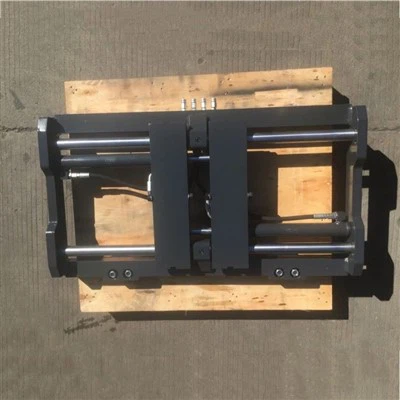
As a leading supplier of fork positioners, I'm often asked about the working principle of hydraulic fork positioners. In this blog post, I'll delve into the details of how these essential forklift attachments operate, their benefits, and the different types available in our product range.
Basic Components of Hydraulic Fork Positioners
Before we get into the working principle, let's first understand the key components of a hydraulic fork positioner. A typical hydraulic fork positioner consists of the following parts:

- Fork Carriage: This is the base structure that attaches to the forklift mast. It provides support for the forks and the hydraulic cylinders.
- Forks: The forks are the primary load - handling components. They can be adjusted in width using the hydraulic system.
- Hydraulic Cylinders: These are the powerhouses of the fork positioner. They convert hydraulic pressure into mechanical force to move the forks.
- Hydraulic Hoses and Fittings: These components are responsible for transporting hydraulic fluid to and from the cylinders, enabling the movement of the forks.
- Control Valves: The control valves regulate the flow of hydraulic fluid, allowing the operator to control the movement of the forks.
The Working Principle of Hydraulic Fork Positioners
The working principle of hydraulic fork positioners is based on Pascal's law, which states that when pressure is applied to a confined fluid, the pressure change occurs throughout the entire fluid. Here's a step - by - step breakdown of how a hydraulic fork positioner works:

- Hydraulic Fluid Supply: The forklift's hydraulic system provides pressurized hydraulic fluid. This fluid is stored in a reservoir and pumped to the fork positioner through the hydraulic hoses.
- Control Input: The forklift operator uses a control lever or button to send a signal to the control valve of the fork positioner. For example, if the operator wants to increase the width between the forks, they will move the control lever in the appropriate direction.
- Valve Operation: The control valve then directs the flow of hydraulic fluid to the appropriate side of the hydraulic cylinders. When the valve allows fluid to enter one side of the cylinder, it creates a pressure difference across the piston inside the cylinder.
- Piston Movement: Due to the pressure difference, the piston in the hydraulic cylinder moves. This movement is transferred to the forks through a mechanical linkage. If the piston moves outwards, the forks move apart; if it moves inwards, the forks move closer together.
- Fork Adjustment: As the piston moves, the forks are adjusted to the desired width. The operator can stop the movement at any time by releasing the control lever, which closes the control valve and stops the flow of hydraulic fluid.
Benefits of Using Hydraulic Fork Positioners
There are several advantages to using hydraulic fork positioners in material handling operations:

- Increased Efficiency: With a hydraulic fork positioner, the operator can quickly adjust the fork width without having to manually reposition the forks. This saves time, especially when handling different pallet sizes or loads.
- Improved Safety: Manual fork adjustment can be dangerous, as it requires the operator to leave the forklift cab. Hydraulic fork positioners eliminate this risk by allowing the operator to make adjustments from the safety of the cab.
- Versatility: Fork positioners can handle a wide range of pallet sizes and load configurations. This makes them suitable for various industries, such as warehousing, manufacturing, and logistics.
- Reduced Product Damage: Properly adjusted forks ensure better load stability, reducing the risk of product damage during handling.
Our Product Range of Fork Positioners
As a fork positioner supplier, we offer a variety of models to meet different customer needs. Here are some of our popular product lines:
- H Series fork Positioners: The H Series is designed for heavy - duty applications. These fork positioners feature robust construction and high - capacity hydraulic cylinders, making them suitable for handling large and heavy loads.
- FPD30E Series Fork Positioners: The FPD30E Series is known for its energy - efficient design. These fork positioners use advanced hydraulic technology to reduce energy consumption while maintaining high performance.
- E Series fork Positioners: The E Series offers a cost - effective solution for light to medium - duty applications. These fork positioners are easy to install and operate, making them a popular choice for small and medium - sized businesses.
Maintenance and Troubleshooting
To ensure the long - term performance of hydraulic fork positioners, regular maintenance is essential. Here are some maintenance tips:

- Check Hydraulic Fluid Levels: Regularly check the hydraulic fluid level in the reservoir and top it up if necessary. Low fluid levels can cause the hydraulic system to malfunction.
- Inspect Hoses and Fittings: Look for signs of wear, damage, or leaks in the hydraulic hoses and fittings. Replace any damaged components immediately.
- Lubricate Moving Parts: Lubricate the moving parts of the fork positioner, such as the pivot points and cylinders, to reduce friction and wear.
- Test the Control System: Periodically test the control system to ensure that the forks can be adjusted smoothly and accurately.
If you encounter any problems with your fork positioner, such as slow movement or leaks, it's important to troubleshoot the issue promptly. In some cases, the problem may be as simple as a loose fitting or low fluid level. However, if the problem persists, it's recommended to contact a professional technician for assistance.
Conclusion
Hydraulic fork positioners are essential tools in modern material handling operations. Their working principle, based on hydraulic power, allows for quick and easy adjustment of fork width, improving efficiency, safety, and versatility. As a fork positioner supplier, we are committed to providing high - quality products that meet the diverse needs of our customers.
If you're interested in learning more about our fork positioners or have any questions about their working principle, installation, or maintenance, we encourage you to contact us for a detailed discussion. Our team of experts is ready to assist you in finding the right fork positioner for your specific requirements and guide you through the procurement process.
References
- "Industrial Forklift Attachments Handbook", John Smith, 2020
- "Hydraulic Systems in Material Handling", Emily Johnson, 2019
- "Forklift Safety and Efficiency Best Practices", Robert Davis, 2021